

Why Cleaning Gutters in Fall Is Essential for Winter Protection
A gutter packed with wet leaves can look harmless in October. By January, that same blockage can turn into ice, overflow, roof damage, and water pushing toward the foundation. Fall is the last practical window to clear gutters before freezing weather makes small problems harder, colder, and more expensive to fix.
Clean gutters do one simple job: they move water away from the house. In winter, that job matters even more because snow, ice, rain, and thaw cycles all put extra pressure on the roofline and drainage system.

Fall debris turns into winter blockages
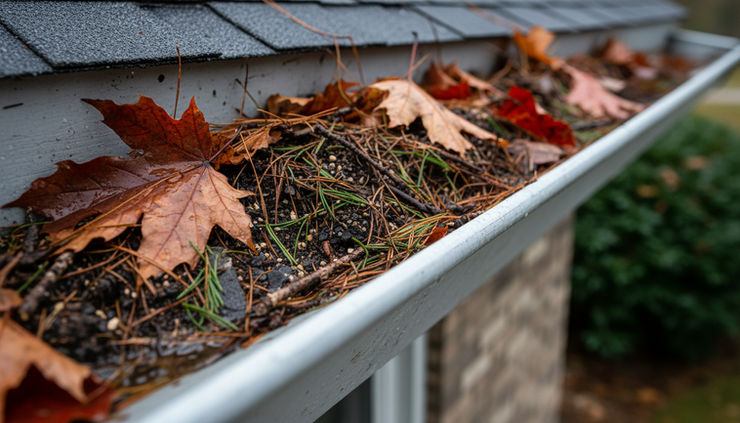
Autumn is when gutters collect the most debris. Leaves, pine needles, twigs, seed pods, and roof grit all wash into the troughs during seasonal rain. If they stay there, they trap water like a sponge.
Once temperatures drop, that wet debris can freeze into a solid mass. A gutter that should carry water to the downspout becomes a long block of ice and leaves. When the next thaw or rainfall comes, water has nowhere to go.
That can lead to:
Overflowing gutters during rain or melt
Ice building along the eaves
Water spilling beside the foundation
Sagging gutters from excess weight
Staining on siding, fascia, and soffits
The problem often builds quietly. A gutter may seem fine from the ground until water pours over the edge during the first winter thaw. By then, cleaning it is more difficult and less safe.
Clean gutters help prevent ice dams
Ice dams are a common winter concern in cold climates. They form when melting snow runs down a roof and refreezes near the colder edge. Clogged gutters do not cause every ice dam, but they can make the conditions worse.
When gutters are full, meltwater cannot drain properly. It sits near the roof edge, freezes, and adds to the ice already forming along the eaves. As ice builds, water can back up under shingles and reach areas that were never meant to handle standing moisture.
That can damage:
Roof underlayment
Shingles
Fascia boards
Soffits
Attic insulation
Interior ceilings and walls
Cleaning gutters in fall gives meltwater a clear path off the roof before snow and freezing rain arrive. It is not a cure for poor attic insulation or ventilation, but it is one of the easiest steps in reducing winter roof stress.
Gutters protect the foundation during freeze and thaw cycles
Winter water damage is not only a roof issue. Gutters also protect the ground around the house.
When gutters overflow, water drops straight down beside the foundation. In fall, that may cause pooling. In winter, the freeze and thaw cycle can make the problem worse. Water seeps into soil, freezes, expands, and then melts again. Over time, that movement can place pressure on foundation walls and create uneven settling around walkways, steps, and driveways.
A clear gutter system directs water into downspouts and away from the home. Downspout extensions are just as important. If the downspout ends too close to the wall, water can still collect where it should not.
A quick fall check should include:
Clearing debris from gutters
Flushing downspouts
Confirming water exits freely
Extending downspouts away from the foundation
Checking that soil slopes away from the house
The goal is simple: keep water moving away from the structure before it freezes.
Heavy debris can pull gutters loose
Wet leaves are heavy. Add standing water, snow, and ice, and the weight can become more than gutter fasteners were built to hold. A clogged gutter may start to sag in the middle or pull away from the fascia.
Once that happens, water no longer flows toward the downspout. It collects in low spots, which adds more weight and makes the sagging worse.
Loose gutters can also damage the wood behind them. Fascia boards may soften if they stay wet for long periods. In cold weather, trapped moisture can freeze inside cracks and gaps, widening damage over time.
Look for warning signs in fall:
Gutters leaning forward
Gaps between the gutter and fascia
Water marks below the eaves
Rust spots or cracks
Downspouts that shake or detach
Screws or brackets pulling loose
A simple cleaning can reveal issues early. It is much easier to tighten a bracket or reseal a joint in mild fall weather than during an icy January freeze.
Fall cleaning makes winter maintenance safer
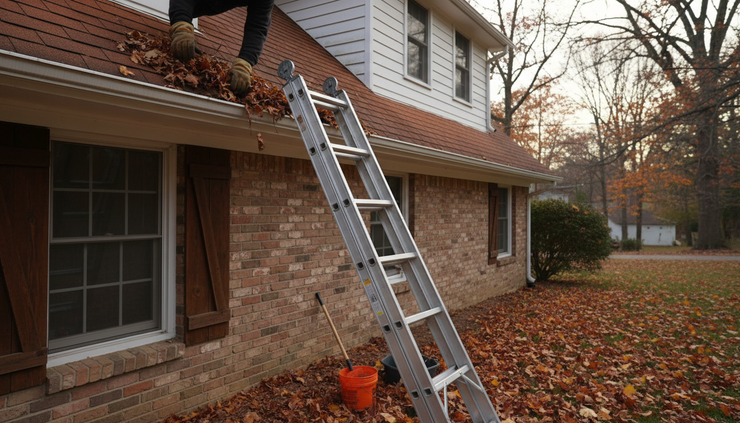
Cleaning gutters after snow arrives is risky. Ladders are less stable on frozen ground, roof edges can be icy, and gutters may be packed with sharp ice instead of soft leaves.
Fall offers better conditions:
Warmer temperatures
More daylight
Less ice on ladders and walkways
Easier debris removal
Better visibility of gutter damage
For many homes, the best time is after most leaves have fallen but before consistent freezing weather sets in. In many parts of Canada, that means late October through November, depending on the local climate and tree cover.
Homes surrounded by mature trees may need more than one cleaning. A first pass can remove early leaf buildup, while a final pass prepares the system for winter.
What a proper fall gutter cleaning should include
A useful cleaning goes beyond scooping out leaves. The whole drainage path needs attention.
Start with the gutters. Remove all loose debris, then check for packed material around outlets where the gutter meets the downspout. These spots clog easily because water funnels debris into a small opening.
Next, test the downspouts. A garden hose can help confirm that water flows freely from top to bottom. If water backs up, the clog may be inside an elbow or at ground level.
Then inspect the system. Look for cracks, loose fasteners, separated joints, and rusted sections. Small repairs now can prevent leaks when snow starts to melt.
A good fall cleaning should leave the system:
Clear of leaves and sediment
Draining toward each downspout
Securely attached to the fascia
Free of obvious leaks
Directing water away from the foundation
Gutter guards can reduce debris, but they do not remove the need for inspection. Fine material can still collect on top, along edges, or inside the gutter over time.
Safety matters as much as the cleaning
Gutter cleaning looks simple, but ladder work can be dangerous. Use a stable ladder on firm ground, keep three points of contact, and avoid reaching too far to the side. Move the ladder often instead of stretching.
Wear gloves, since gutters can contain sharp metal edges, screws, roofing grit, and decaying organic material. Eye protection helps when flushing downspouts or pulling debris from corners.
Skip the work during high winds, freezing rain, or slippery conditions. If the home is tall, the roofline is difficult to reach, or the ground is uneven, hiring a professional is the safer choice.

A small fall task can prevent major winter damage
Gutters are easy to ignore until they fail. Yet they play a key role in protecting the roof, siding, foundation, and interior from winter moisture.
Cleaning them in fall removes the debris that would otherwise freeze, block drainage, and add weight to the system. It also gives time to spot repairs before snow and ice make access harder.
The takeaway is practical: clear the gutters after the leaves fall, check that every downspout drains, and make sure water moves away from the house. That one seasonal task can help the home handle winter with far fewer surprises.



Comments